

Tag Archives for Horse
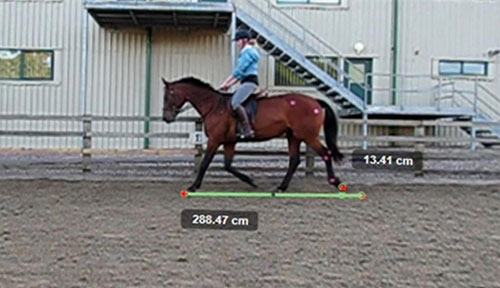
An investigation into the relationship between asymmetrical loading of the stirrups by the rider and hind-limb kinematics of the horse during rising trot.
29/05/2017 by McTimoney Animal
in horse-rider interactions, kinematic effects
Evidence of a relationship between horse hindlimb peak flight arc asymmetry and rider stirrup force asymmetry
Providing further evidence and understanding of horse-saddle-rider interaction

A preliminary study on the effects of head and neck position during feeding on the alignment of the cervical vertebrae in horses.
29/06/2016 by McTimoney Animal
in musculoskeletal symmetry
The method of feeding hay to horses (floor, haynet, Haybar) affects the head and neck position on a daily basis.
Study suggests an effect on the musculoskeletal system, with notable differences in areas of muscle tension.
May imply a link between how horses are fed and their musculoskeletal health

A preliminary study of the effect of manual chiropractic treatment on the splenius muscle in horses when measured by surface electromyography.
29/11/2014 by McTimoney Animal
in treatment effects
Evidence of a statistically significant reduction in splenius muscle activity following chiropractic treatment (McTimoney method).
Measuring muscle activity in a stabilising muscle of the spine may be a useful method of determining the effectiveness of chiropractic treatment in horses

The effects of manual chiropractic (McTimoney) and instrument assisted chiropractic on spinal mechanical nociceptive thresholds (MNTs) in flat racehorses without clinical signs.
29/11/2014 by McTimoney Animal
in treatment effects
Positive evidence that McTimoney chiropractic and instrument assisted chiropractic using an Integrator treatments on horses reduces sensitivity to pain (increased MNT’s) compared to no treatment.
McTimoney treatment appears to have a longer lasting effect (day 10) on increasing MNTs compared to treatment with the Integrator.

The effect of manual chiropractic (McTimoney) treatment on pressure measurements beneath the saddle.
29/11/2014 by McTimoney Animal
in horse-rider interactions, treatment effects
Back problems in horses are recognised as an important factor in performance impairment.
Saddle fit is considered a factor in the pathogenesis of back problems.
Positive evidence that chiropractic treatment affects the horse’s back and reduces mean pressure beneath the saddle.
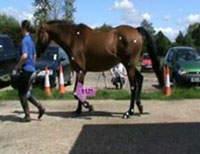
The effects of chiropractic treatment on the range of motion of the carpus and tarsus of horses
29/04/2014 by McTimoney Animal
in kinematic effects, treatment effects
Clinical signs of back pain and spinal dysfunction can include asymmetric or restricted joint motion.
Positive support evidence that chiropractic treatment of horses may increase joint ROM of the carpus and tarsus and improve joint ROM asymmetry.


