

All posts by McTimoney Animal

Reggie the wobbly dog
20/11/2023 by McTimoney Animal
in canine, dog
Reggie is a 6 year old male Doberman owned by Jess Woodrow and is a client of Claire Lawrence, a McTimoney Animal Chiropractor. Initially Reggie was seen for maintenance treatments every three months as he was competing at agility. It…
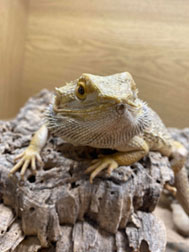
Jeff the Bearded Dragon
01/09/2023 by McTimoney Animal
in exotics, other animal stories
Jeff is a Bearded Dragon who is owned by the animal centre at Cirencester College after rehoming him a few years ago. Bearded Dragons are native to Australia and are large semi-arboreal lizards that are not nocturnal. Combined with being…

A preliminary investigation into laterality differences of range of motion during flexion and extension of canine proximal limb joints
24/01/2023 by McTimoney Animal
in dogs, range of motion
A preliminary investigation into laterality differences of range of motion during flexion and extension of canine proximal limb joints Research into musculoskeletal imbalance and laterality differences of limb joint range of motion (ROM) in canines is limited. Bilateral ROM measures…

Preliminary investigation into the effects of chiropractic treatment, myofascial release, and a combined treatment on mechanical nociceptive thresholds of horses
24/01/2023 by McTimoney Animal
in treatment effects
Preliminary investigation into the effects of chiropractic treatment, myofascial release, and a combined treatment on mechanical nociceptive thresholds of horses Chiropractic treatment alone and when combined with myofascial release techniques (MFR) reduced response to pain compared to no treatment or…

The effect of chiropractic treatment for horse riders on the saddle pressure distribution beneath the saddle
02/03/2021 by McTimoney Animal
in horse-rider interactions
The horse-saddle-rider interaction is recognised as an important factor in performance impairment.
Weight bearing asymmetries in horse riders have been identified but not investigated for effects of correcting this imbalance.
Positive evidence that chiropractic treatment improves the weight distribution symmetry of the rider under the saddle immediately following treatment.

An investigation into the relationship between rider pelvic asymmetry and equine pelvic asymmetry in relation to the use of physical therapy
02/03/2021 by McTimoney Animal
in pelvic symmetry, horse-rider interactions
Pelvic asymmetries can alter body mechanics which may affect performance.
Physical therapy to improve pelvic symmetry is increasingly provided for both horses and riders.
For horses and riders receiving regular physical therapy, the pelvic symmetry of both improves compared to horses and riders receiving no physical therapy.
This should be an encouragement to riders to not only look after their horses but themselves as well.


