

Walking One Paw at a Time: Reba’s Remarkable Journey
The Accident
When Jo contacted Cat Ferguson one day in October 2024 to book in her 9yo Bichon Frise x Cocker Spaniel, Reba, for a routine McTimoney chiropractic treatment, the last thing Cat expected was to receive a further message from her at 6am a few days later: Only pencil this appointment in, we might have to postpone… Reba’s broken her neck and may be having surgery today… Will keep you updated.
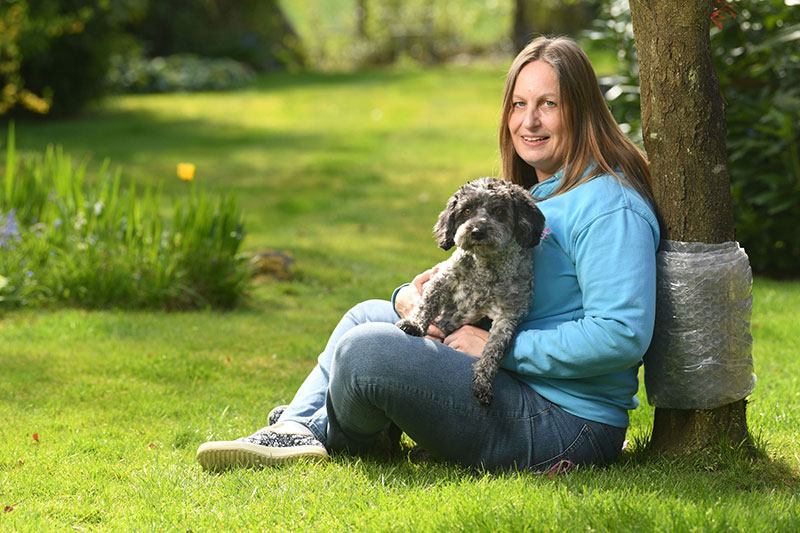
In a freak accident, Reba had collided with a tree in Jo’s back garden late one night. Imaging showed a displaced alignment of the vertebrae in her neck, a sheared off bone fragment from the left transverse process of the third cervical vertebra (C3), and contusion of the spinal cord. Reba underwent emergency surgery at a specialist veterinary referral centre the following day, whereby C3 was fused to the vertebrae on either side through the use of metal plating, and the bone fragment was pinned and cemented back into place. In the immediate aftermath of the surgery, Reba was paralysed in her left forelimb and hindlimb (known as hemiplegia) and experienced partial paralysis of her right limbs (hemiparesis), meaning she was limited to lateral recumbency and could not stand up unsupported. She was also doubly incontinent. She was started on an intense physiotherapy regime during her time as an in-patient, before being discharged 10 days post-injury. Amazingly, Reba’s scheduled treatment with Cat went ahead as planned, only with a drastic change in focus away from their usual maintenance sessions towards an intense programme of rehabilitation!
Adapting Treatment and Building Trust
The first time Cat saw Reba after her accident, the most striking change – aside from the obvious physical differences – was her emotional state. Cat had been treating her for a couple of years prior to her injury, and Reba was familiar with both her and the treatment process, but even with this advantage the session had to be adapted to account for her newly vulnerable state.
Reba was clearly carrying significant emotional trauma from her injury and required a lot of reassurance from Jo. Cat allowed additional time for these initial sessions so Reba could take breaks as needed and to keep her as comfortable as possible. With a long road to recovery ahead of them, it was critical not to lose her trust in Cat as a therapist.
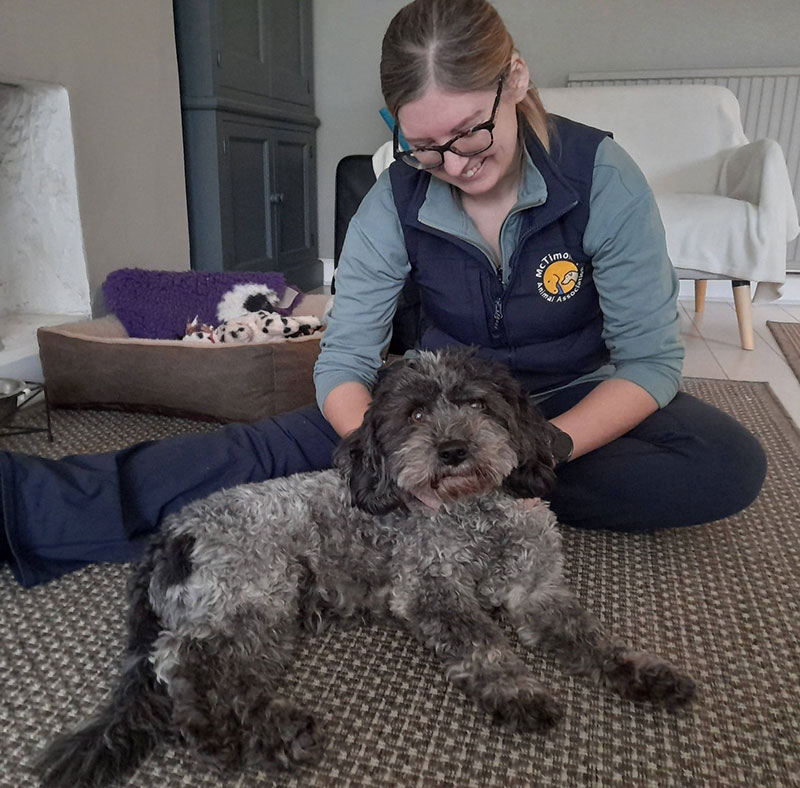
The sessions also involved some physical adaptations. Under normal circumstances, much of the McTimoney treatment is performed with the dog standing squarely to ensure Cat’s palpation is as accurate as possible. With Reba unable to stand unassisted and having a strong preference for lying on one side, treatment had to be adjusted around her limitations. Due to the nature of her injury and the reconstructive surgery, there could also be no mobilisation or manipulation of Reba’s neck. Initially, chiropractic adjustments were limited only to the thoracolumbar spine, gradually building up the amount of treatment over time in accordance with how Reba was coping with each session. Massage techniques were focused on reducing hypertonicity, increasing blood flow, and maintaining range of movement in the joints of her left limbs. As Reba gradually started to regain movement and the ability to walk, Cat also needed to consider how to manage compensatory issues in her right limbs, as these were taking so much of the burden in both weight-bearing and in driving movement.
A Multidisciplinary Approach to Rehabilitation
Throughout her recovery, Reba has benefited from a variety of different therapies. Acupuncture was used to stimulate the nervous system in the weeks immediately post-injury. Hydrotherapy has been incredibly beneficial, starting with swimming in the early rehabilitative period where Reba was unable to weight-bear, and graduating to the underwater treadmill to aid correct gait and muscle patterning. Physiotherapy has provided Reba and Jo with a targeted exercise programme which has been advanced carefully over time according to Reba’s progress – intended to enhance mobility, restore joint function, and build muscle strength.
Cat’s role in Reba’s recovery has been to provide McTimoney animal chiropractic, massage, and passive stretching. Cat’s aims have been to promote symmetry in the pelvis and spine, optimise joint movement, limit muscle atrophy, improve circulation, reduce swelling, reduce hypertonicity in the affected limbs, promote tissue repair, and limit reliance on compensatory movement. All of the allied professions have been pulling together to work towards the same goals, but the most important thing through all of this has been Jo’s commitment to doing everything in her power to help Reba. Only so much can be achieved through the therapies in isolation, and the owner has to keep up the good work outside of sessions to really see the results.
Eighteen Months On
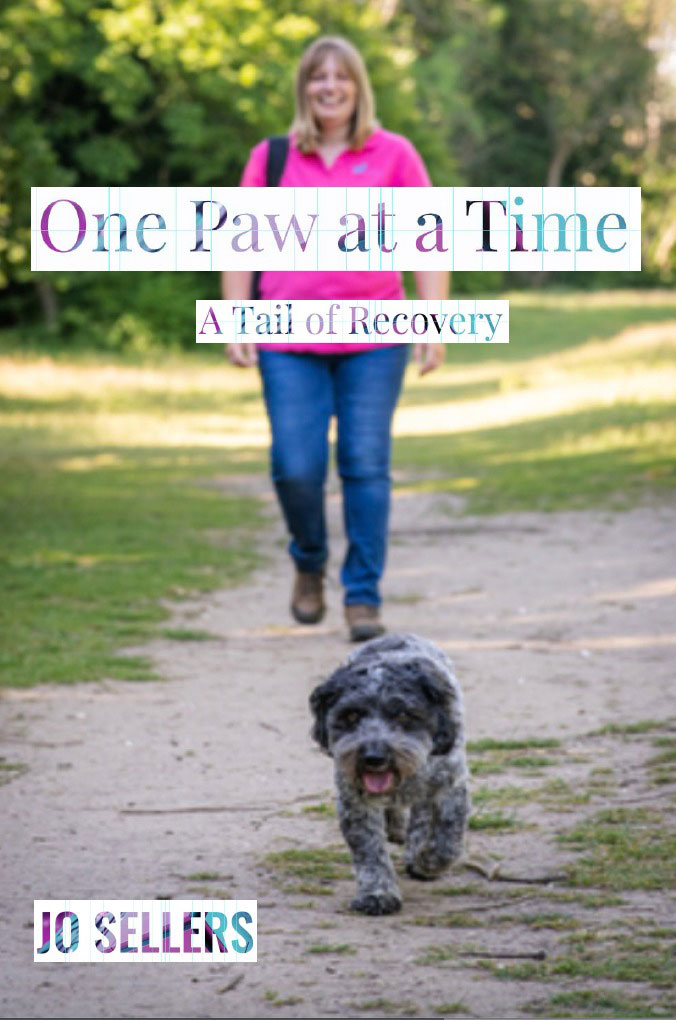
18 months on from Reba’s accident, and this dedication is evident in her recovery. She lives a largely normal life, with some limitations. She still experiences mild ataxia (lack of co-ordination) in her left limbs and fatigues more readily on walks, meaning her exercise needs to be managed carefully, but is able to walk, run, and get up and downstairs. She even has an excellent turn of speed, which she likes to show off through her excited ‘zoomies’ when Cat turns up for her routine maintenance sessions!
Advice for Owners
Cat’s best advice for any owners going through something similar with their dog would be to explore therapies provided by suitably qualified allied veterinary professionals (don’t be afraid to ask about this – highly trained therapists will be proud to tell you about their qualifications!) to find someone best suited to meet their dog’s needs. In cases such as Reba’s, where there is a long journey of rehabilitation ahead of owners, it is so important to find a practitioner you can trust and feel comfortable working alongside. And then, crucially, follow their advice and do the homework between therapy sessions to ensure the best possible chance at recovery for the dog.
About the Practitioner:
Cat Ferguson is a fully qualified and insured animal therapist, specialising in McTimoney chiropractic, soft tissue techniques and low-level laser therapy. Cat provides a friendly and professional service, and her qualifications include a MSc in Animal Manipulation from the McTimoney College of Chiropractic and a Graduate Certificate in Animal Therapy.
Cat is regulated by the McTimoney Animal Association (MAA) – the professional body for McTimoney Animal Practitioners – and is a member of the International Association of Animal Therapists (IAAT).
Website: https://catferguson.co.uk/

